
Tesla's move from flagship vehicle lines toward humanoid production makes an industrial ambition concrete. It does not, by itself, establish what the robots can do. The useful question for Physical AI teams is how manufacturing scale connects to a learning process that can demonstrate reliable task performance.
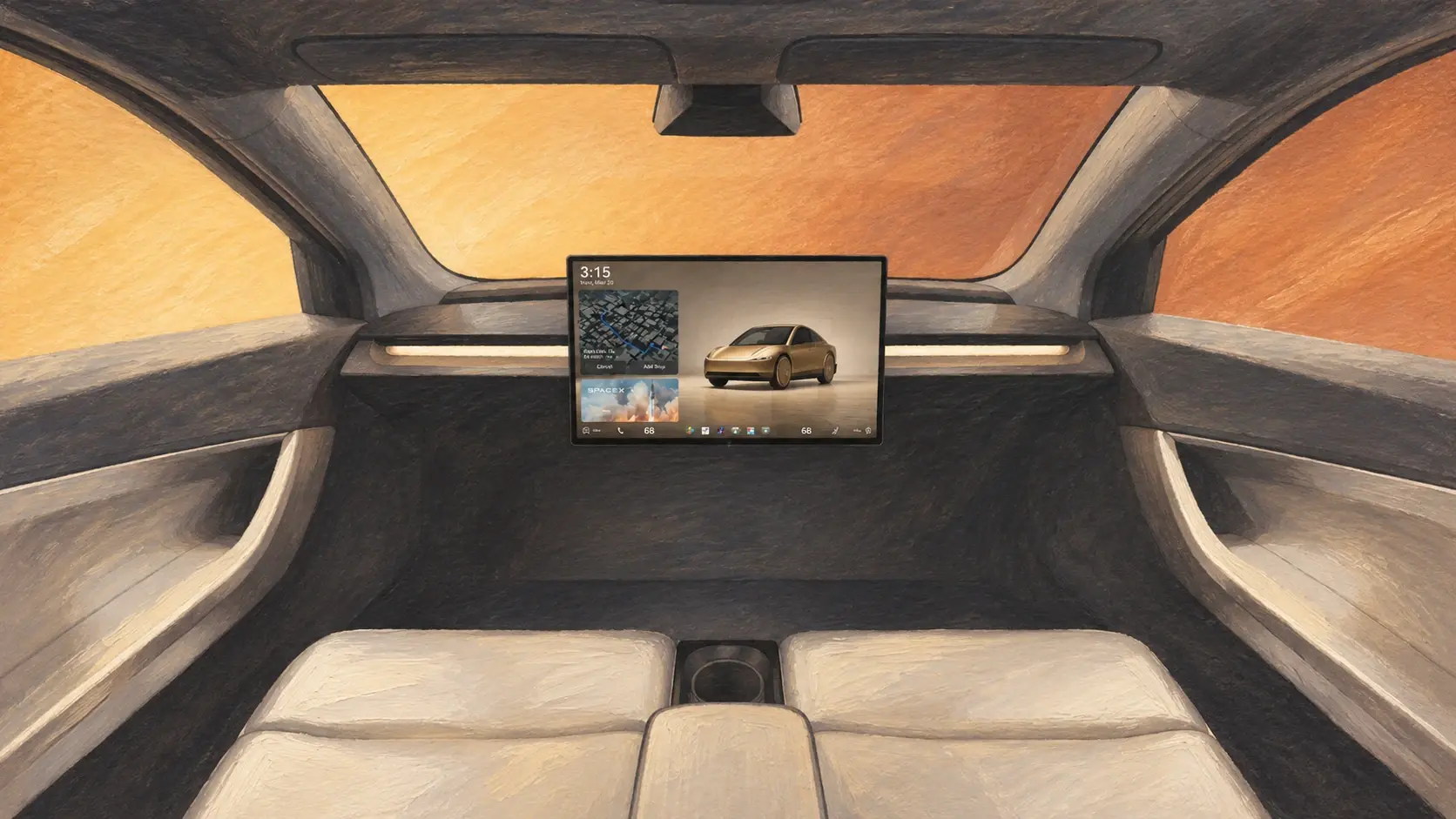
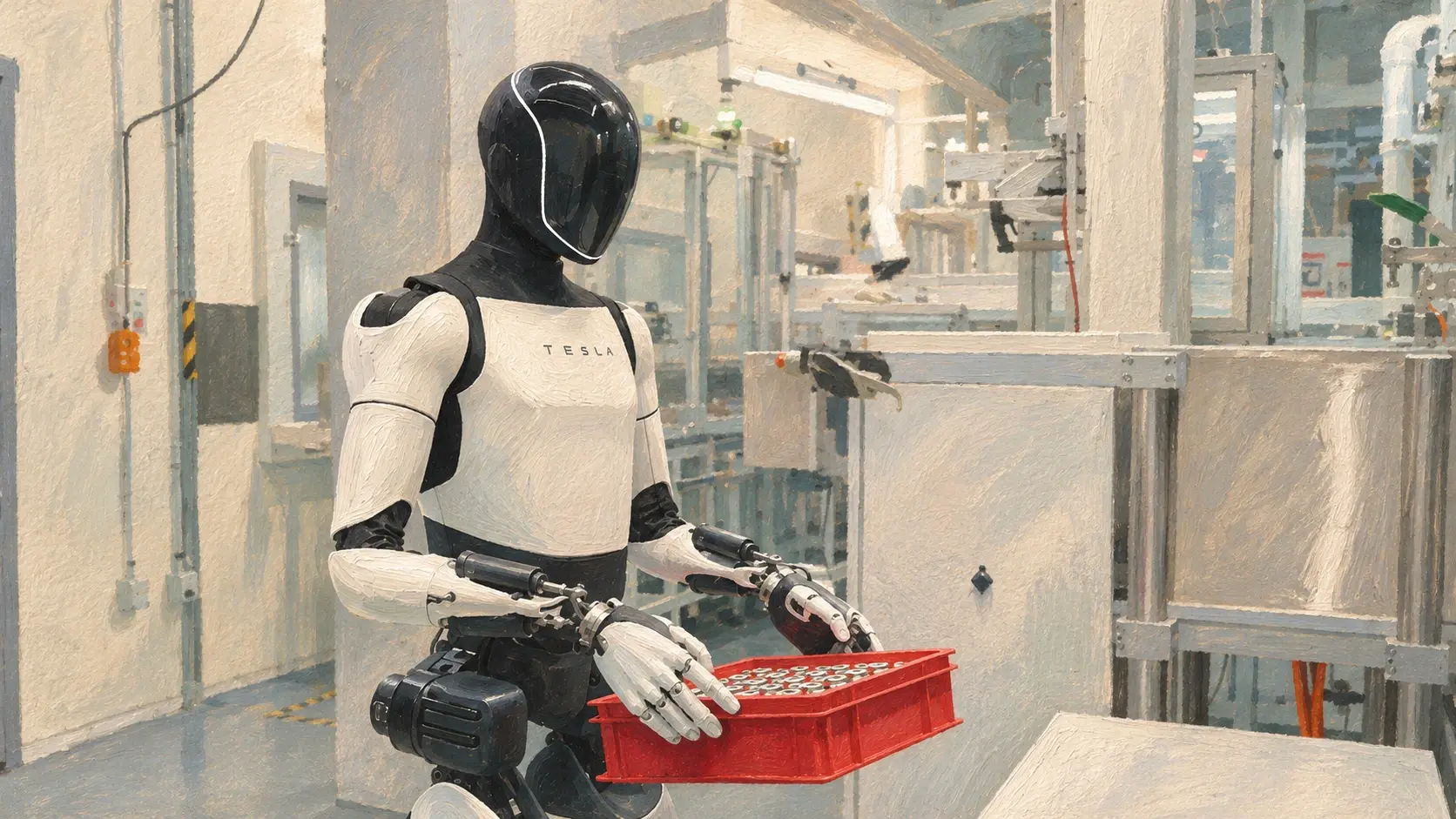
Tesla's Q4 and FY 2025 update described an eventual planned Optimus capacity of one million robots per year, with production then planned to start before the end of 2026. Its Q1 2026 update subsequently specified that the first-generation line would replace the Model S and Model X lines in Fremont. These are dated company plans, not evidence that the stated annual output has been achieved.
The delivery context also needs care. Tesla's 2025 production and delivery report reports 50,850 deliveries under Other Models. It does not identify that number as Model S and Model X deliveries alone. The aggregate cannot establish those two models' individual economics or make their retirement inevitable.
Driving experience is not a manipulation dataset
A driving recording does not directly supply the commanded hand actions, measured joint state, contact signals, or task outcomes a manipulation program may require. Those fields must be recorded or derived with their provenance made explicit. More driving miles are not automatically more examples of grasping, pouring, or recovering a dropped object.
That is different from claiming there can be no transfer. The Open X-Embodiment research reports positive transfer across multiple robot platforms in its experiments. It does not measure transfer from Tesla's driving fleet to Optimus. Neither a zero-transfer claim nor a guaranteed transfer benefit follows from it.
Our inference is narrower: teams should distinguish reusable representations and engineering methods from the task-specific evidence a new embodiment still needs. The amount that transfers is an evaluation question, not something a vehicle-mile count settles.
Factory capacity and useful work are different milestones
A production target is a commitment to build capacity. It is not a customer acceptance result, an installed fleet, or proof of profitable operation. The same distinction applies to a demonstration: success on one staged task does not establish a useful operating envelope.
For a proposed deployment, define the tasks, environments, intervention conditions, and review period. Measure completion and recovery alongside failures and operator effort. These are evaluation questions we recommend asking, not results attributed to Tesla or promises about Avala's services.
Hardware matters to this process. Sensors, actuators, calibration, and controller behavior constrain what can be recorded and learned. A lower purchase price alone does not demonstrate a lower cost per accepted task.
Define the missing evidence before collecting more
There is no single hours target that establishes readiness for every robot. A useful collection plan starts with the failures or uncovered conditions that matter to the intended task, then specifies the signals and acceptance checks needed to investigate them.
Keep measured state separate from commands and estimates. Record the timing, units, coordinate frames, and calibration context that the downstream workflow needs. Preserve unsuccessful attempts when they are technically valid and relevant, with outcomes and interventions identified rather than silently relabeled as successes.
Then compare the resulting training change on held-out conditions. A larger dataset may help, but the evidence is the evaluation result. A projected global shortage of robot data cannot substitute for that test.
The learning loop must earn its place
Our thesis is that the durable advantage comes from repeatedly connecting real-world experience to a justified next training decision. A fleet can provide opportunities to observe failures; it still needs a process for selecting recordings, checking their quality, reviewing labels, preserving dataset lineage, and evaluating the next model.
That process should make it possible to explain what changed and what remains uncertain. It does not guarantee that data is the only bottleneck or that the company with the most recordings wins. Hardware, modeling, operations, and evaluation all remain part of the problem.
Tesla's factory plans make the ambition visible. The capability must still be demonstrated task by task. That distinction is the reason Avala connects data collection, labeling, review, and delivery while the customer owns, trains, and evaluates the model.
Explore automotive and autonomy workflows or robotics workflows.